


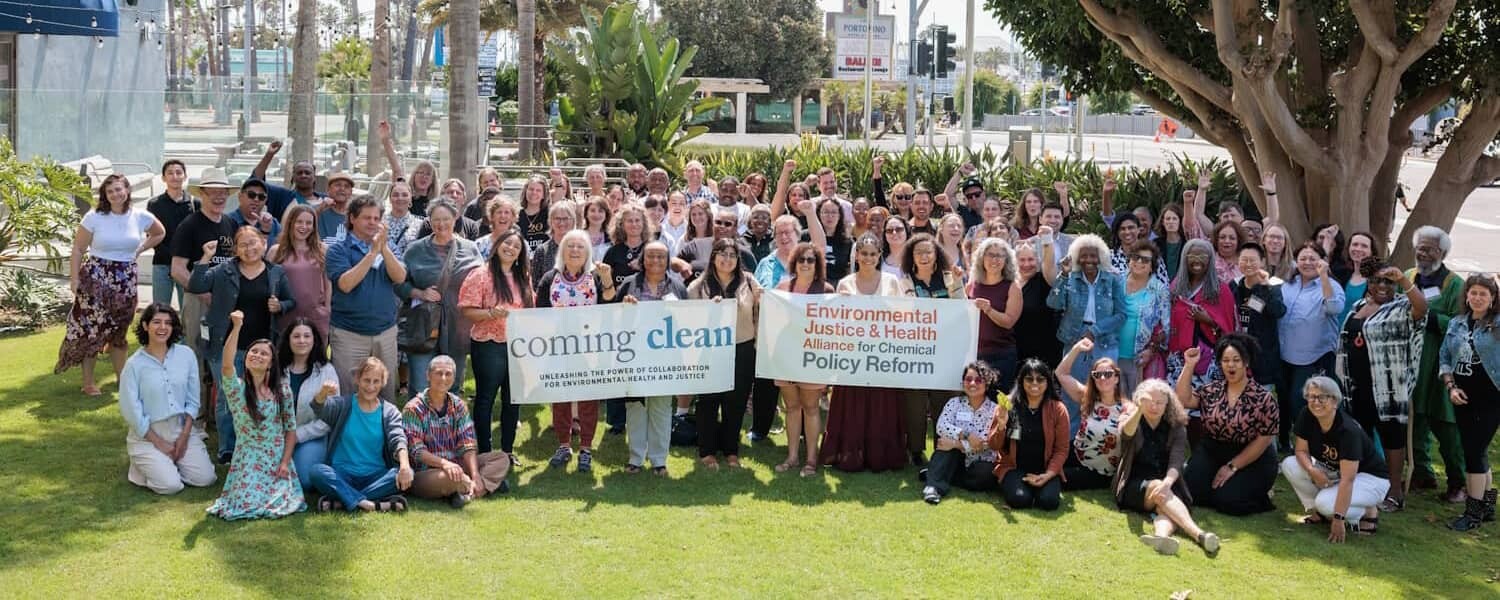
Environmental Justice Health Alliance for Chemical Policy Reform
Coming Clean is a nonprofit environmental health collaborative working to transform the chemical industry so it is no longer a source of harm, and to secure systemic changes that allow a safe chemical and clean energy economy to flourish. Our members are organizations and technical experts — including grassroots activists, community leaders, scientists, health professionals, business leaders, lawyers, and farmworker advocates — committed to principled collaboration to advance a nontoxic, sustainable, and just world for all. Learn more
Coming Clean and the Environmental Justice Health Alliance for Chemical Policy Reform (EJHA) have worked in strategic partnerships for over 20 years. EJHA is a network of grassroots organizers from communities that are disproportionately impacted by toxic chemicals from legacy contaminations, ongoing exposure to polluting facilities, and health-harming chemicals in household products. Visit their website to learn more
-
SAFE FIELDS & FOOD
Protecting farmworkers from harmful chemicals and supporting sustainable local food systems.
Learn More -
SAFE PRODUCTS & STORES
Defending customers and our families from toxic chemicals in products.
Learn More -
SAFE CHEMICALS & FACILITIES
Protecting fenceline communities and facility workers from chemical disasters and toxic chemical exposure.
Learn More


-
LIFE AT THE FENCELINE
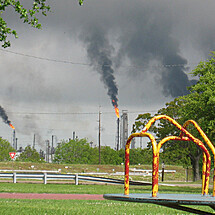
Watch the video: Roughly 40% of the population live within 3 miles of chemical facilities that could leak, spill, or explode.
Learn More -
THE PESTICIDE MAPPING PROJECT
A new multimedia series illustrates the health and climate harms of pesticides across their toxic lifecycle from fossil fuels to farms.
Learn More -
PREVENTING CHEMICAL DISASTERS
Watch the video: We're calling on the EPA to strengthen the rules for hazardous facilities.
Learn More

September 28, 2026
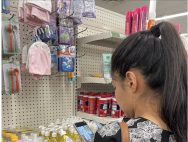
Dollar store makeup, laundry detergent and skincare products list chemicals linked to health harms, highlights new product screening
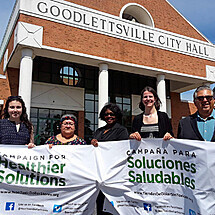
New product screening data from the Campaign for Healthier Solutions highlights dollar store personal care and household products that openly list ingredients linked to health harms, including endocrine disruption, reproductive harm, and cancer. Six out of 78 products screened listed chemicals that are prohibited in cosmetics in at least one U.S. state, now or starting in 2027, including PFAS, formaldehyde releasers, toluene and lilial. “Dollar stores need to get ahead on compliance,” said José Bravo, National Coordinator of the Campaign for Healthier Solutions. “Our product screening initiative shows it’s not that hard to find a banned ingredient openly listed on product labels in the dollar store beauty aisle.” California bans intentionally-added PFAS in cosmetic products, which include products applied to the human body for cleansing and beautifying. A “Bling Bubbles Razz-Fizz Scented Purify & Detoxify Bubbling Face Mask” sold at a Dollar Tree in Coachella, California in July 2026 listed “methyl perfluoroisobutyl ether” in its ingredients, which is a PFAS chemical according to California law.
Read MoreSeptember 28, 2026
Un nuevo análisis de productos revela que el maquillaje, el detergente para ropa y los productos para el cuidado de la piel vendidos en tiendas de bajo costo contienen sustancias químicas relacionadas con riesgos para la salud.
Datos de análisis de nuevos productos, procedentes de la organización Campaign for Healthier Solutions, señalan productos de cuidado personal y del hogar vendidos en tiendas de bajo costo que indican abiertamente contener ingredientes asociados a riesgos para la salud, tales como alteraciones endocrinas, daños reproductivos y cáncer. Seis de los 78 productos analizados contenían sustancias químicas prohibidas en cosméticos en al menos un estado de EE. UU. ya sea actualmente o a partir de 2027, entre ellas PFAS, liberadores de formaldehído, tolueno y lilial. “Las tiendas de dólar deben adelantarse en materia de cumplimiento”, afirmó José Bravo, coordinador nacional de la Campaña por Soluciones más Saludables (Campaign for Healthier Solutions). “Nuestra iniciativa de análisis de productos demuestra que no es difícil encontrar un ingrediente prohibido que aparece abiertamente en las etiquetas de los productos de la sección de belleza de estas tiendas.”
Read More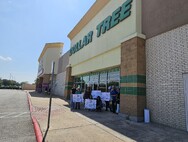
August 17, 2026
Dollar Tree expands chemical safety policy with new restrictions and greater supplier transparency
This year, Dollar Tree published an expanded Chemical Management Policy that commits to restrict more harmful chemicals in key private-label product categories, including food packaging, children’s products, and formulated products such as beauty, personal care and household cleaning products. “We applaud Dollar Tree’s efforts to eliminate chemicals linked to endocrine disruption, learning disabilities, cancer and reproductive harm from its shelves,” said José Bravo, Coordinator of the Campaign for Healthier Solutions. “Families deserve safe products and healthy food no matter where they shop.”
Read More
July 28, 2026
We're hiring a Network Director!
The Network Director is a key part of the Program Directors team - with the Executive Director, Director of Communications and Research, and the Federal Policy Director - which lead Coming Clean’s Programs Department. The Network Director plays an important role in the leadership of the organization, helping to lead the organization and guide programmatic strategy. The Network Director also oversees the work of Coming Clean’s contracted leadership, teams, initiatives, and campaigns as well as provides oversight for the whole of the Coming Clean Network. The Network Director organizes and manages the network, onboarding new members, tracking membership data, and facilitates collaborative membership spaces.
Read More
July 27, 2026
New community power story: "One Less Polluter in Armourdale"
RiSE4EJ and Coming Clean partnered to tell an inspiring story of community organizing in Kansas City. "One Less Polluter in Armourdale" is a success story about community members standing up to the private-equity-backed Reworld (better known as Covanta) and fighting until the company withdrew its application to operate a new waste processing facility in a neighborhood already overburdened by pollution.
Read More
Coming Clean is a nonprofit collaborative of environmental health and environmental justice experts working to reform the chemical and energy industries so they are no longer a source of harm. We coordinate hundreds of organizations and issue experts—including grassroots activists, community leaders, scientists and researchers, business leaders, lawyers, and advocates working to reform the chemical and energy industries. We envision a future where no one’s health is sacrificed by toxic chemical use or energy generation. Guided by the Louisville Charter, Jemez Principles of Democratic Organizing, and the Principles of Environmental Justice, we are winning campaigns for a healthy, just, and sustainable society by growing a stronger and more connected movement.